Our use of cookies

Some cookies are necessary for us to manage how our website behaves while other optional, or non-necessary, cookies help us to analyse website usage. You can Accept All or Reject All optional cookies or control individual cookie types below.

You can read more in our Cookie Notice

Functional

These cookies enable core functionality such as security, network management, and accessibility. You may disable these by changing your browser settings, but this may affect how the website functions.

Analytics cookies

Analytical cookies help us to improve our website by collecting and reporting information on its usage.

Third-Party Cookies

These cookies are set by a website other than the website you are visiting usually as a result of some embedded content such as a video, a social media share or a like button or a contact map

Dairy Council

Dairy’s role in achieving healthy, sustainable European diets: closing nutritional & sensory gaps, NS Congress, Newcastle 2026

EMF members, including DCNI, hosted a Satellite Symposium at the Nutrition Society Congress in Newcastle.
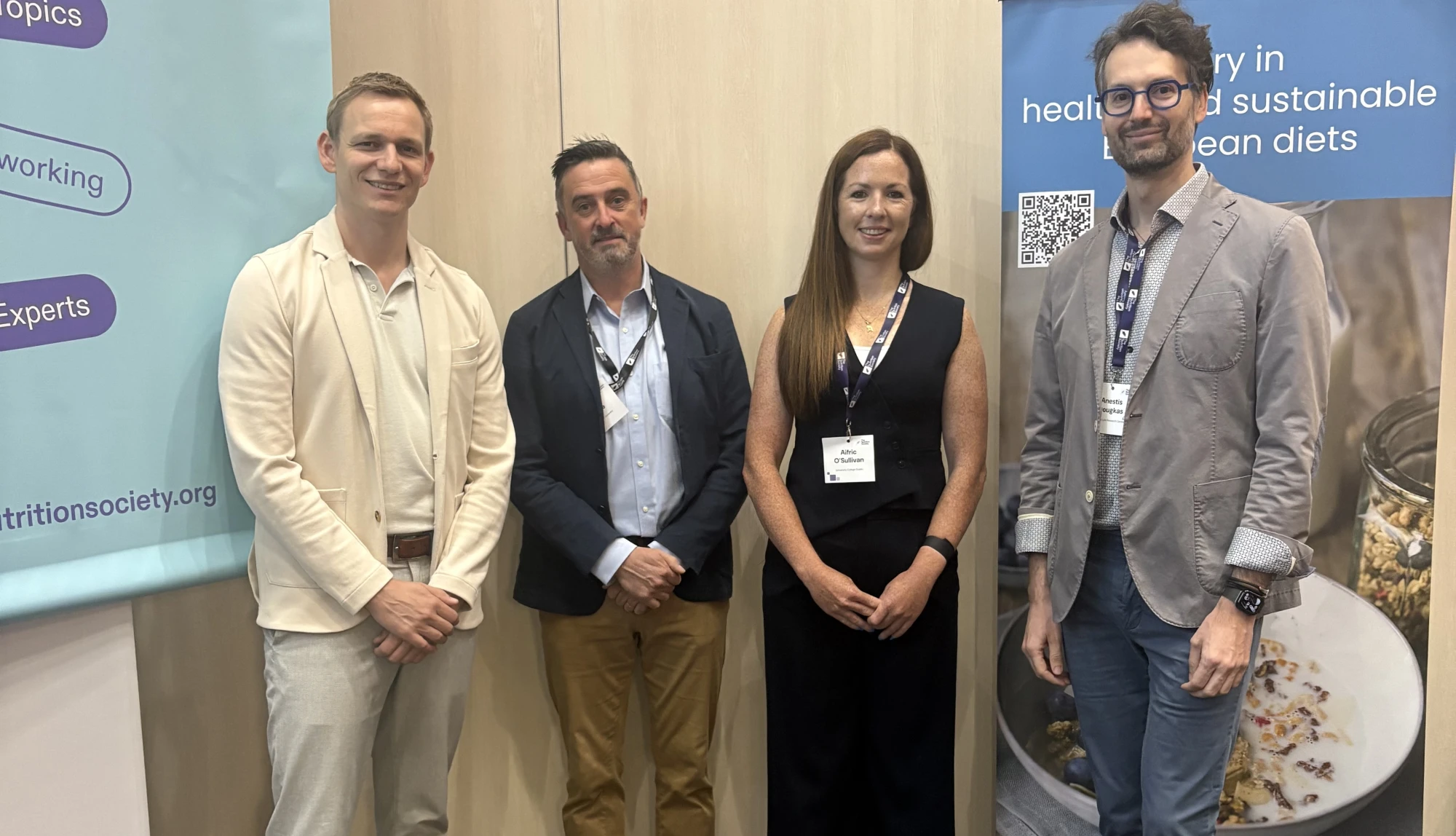
Dr Pol Grootswagers, Dr Ciaran Forde, Dr Aifric O'Sullivan, Dr Anestis Dougkas

The symposium explored 'Dairy’s role in achieving healthy, sustainable European diets: closing nutritional and sensory gaps'

Co-chaired by Prof Ciarán Forde and Dr Pol Grootswagers, Wageningen University and Research, the session examined the potential role of the sensory properties of dairy foods in supporting the transition towards more healthy and sustainable dietary patterns in Europe and examined how they may also help ensure that nutritional requirements are met.

Click on a presentation to download it

Dr Anestis Dougkas from Institut Lyfe Research and Innovation Centre, Lyon spoke about Sensory perception and eating behaviour: why dairy matters’. His presentation highlighted that understanding how sensory perception influences eating behaviour is essential for bridging the gap between nutritional guidance and real-world food choices. Using dairy as a case study, he illustrated how the dairy matrix generates a unique combination of flavour, texture and mouthfeel that contributes to food enjoyment and acceptance. In this way dairy may serve as a culinary bridge within more plant-forward dietary patterns by enhancing sensory appeal, reducing barriers to acceptance and supporting dietary adherence.

Dr Aifric O’Sullivan looked at ‘Addressing nutrient adequacy and supporting dietary behaviour change - two fundamental challenges in achieving sustainable healthy diets drawing on her research at University College Dublin with the MyPlanetDiet and PLAN’EAT studies. Evidence from MyPlanetDiet showed that those participants who ate 2 to 3 (or more) servings of dairy foods a day achieved adequate intakes of calcium, iodine and vitamins B2 and B12, while those with lower intakes did not. The amounts of dairy foods consumed in the diets did not impact on greenhouse gas emissions.The MyPlanetDiet findings suggest that higher dairy consumption may help reduce the risk of micronutrient inadequacy without increasing greenhouse gas emissions.

Download the symposium brochure.

Watch a recording below: